Break Free from Pain: Gua Sha & Graston Therapy Explained
You've stretched. You've rested. You've tried everything — and that stubborn tightness in your shoulder, calf, or lower back just won't quit. If muscle adhesions or scar tissue are at the root of your problem, Gua Sha and Graston Therapy may be exactly what your body has been waiting for.
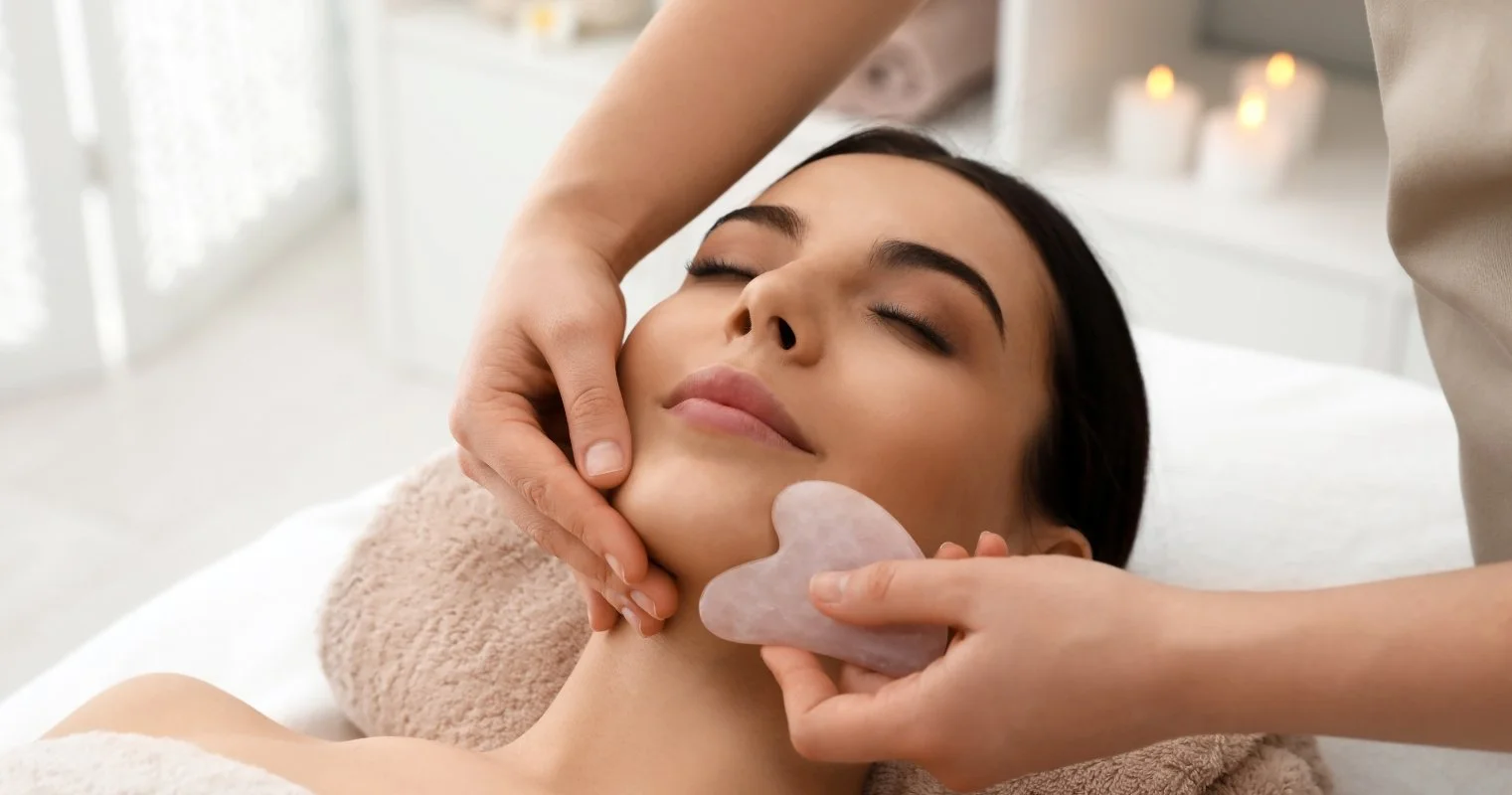
At Why Knot! Massage & Wellness in Calgary, our Registered Massage Therapist Sandeep offers both Gua Sha and Graston Therapy — a powerful combination of time-tested traditional healing and cutting-edge instrument-assisted technique. In this guide, we break down everything you need to know: what these treatments are, how they work, who benefits most, and what to expect when you walk through our doors.
What Are Gua Sha & Graston Therapy?
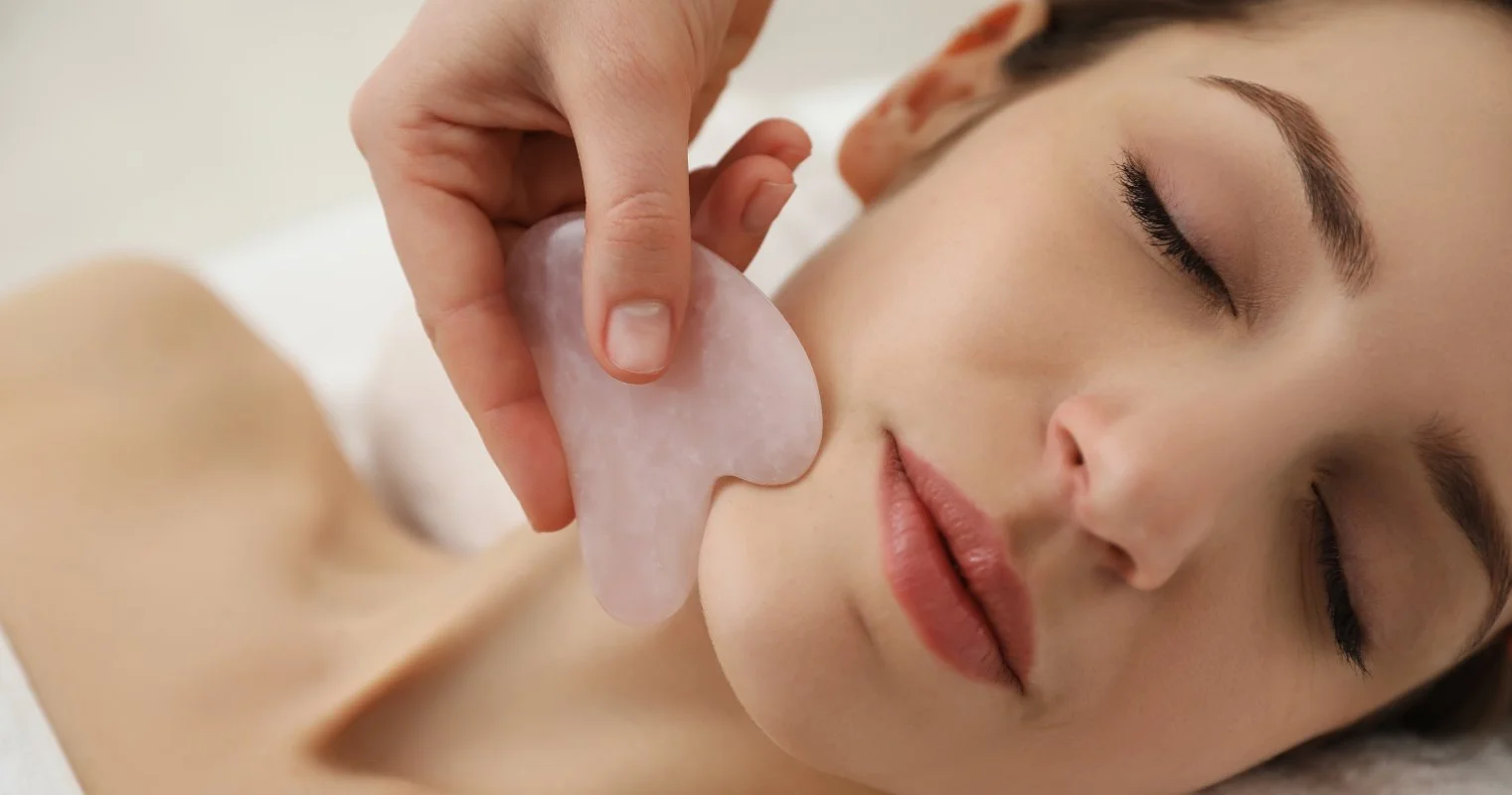
Gua Sha (pronounced "gwah-shah") originated in Traditional Chinese Medicine over 700 years ago. The name translates roughly as "scraping away illness." Practitioners use smooth-edged jade, horn, or ceramic tools to apply firm, rhythmic strokes along muscle pathways, breaking up stagnation and promoting the movement of qi — what we now understand as improved blood and lymphatic flow.
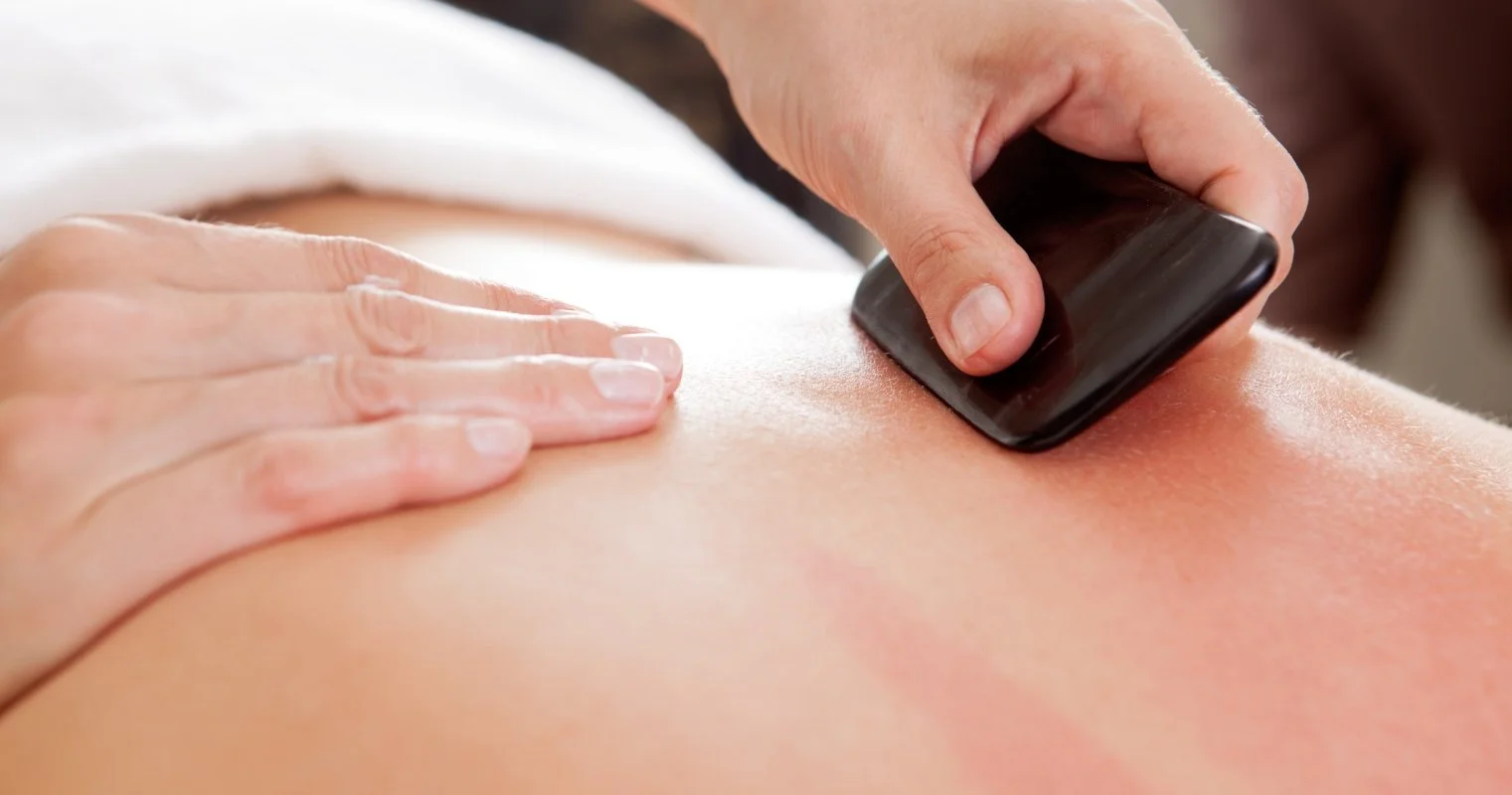
Fast-forward to modern sports medicine: Graston Technique® (also called Instrument-Assisted Soft Tissue Mobilization, or IASTM) emerged in the 1990s as a clinically validated evolution of these same principles. Instead of traditional materials, therapists use precisely contoured stainless-steel instruments to detect and treat restrictions in the fascia — the connective web that wraps every muscle, tendon, and organ in your body.
Despite their different origins, both therapies share one fundamental goal: to physically disrupt and remodel the dysfunctional tissue that causes pain, stiffness, and restricted movement.
How Does It Actually Work?
When muscles are overused or injured, the body lays down disorganized collagen fibers — commonly called adhesions or scar tissue. These fibers are stiffer than healthy tissue. They restrict movement, compress nerves, and create that familiar "knot" that never fully releases on its own.
Here's what happens during treatment:
Mechanical disruption — The tool's edge detects "gritty" texture (the adhesion) and applies controlled shear force to break down the collagen cross-links.
Healing response — Controlled micro-trauma triggers your body's repair system, flooding the area with fibroblasts, growth factors, and fresh blood supply.
Tissue remodeling — Over the next few days, disordered scar tissue is replaced with properly aligned collagen fibers — restoring flexibility, mobility, and pain-free function.
5 Key Benefits of Gua Sha & Graston Therapy
Breaks Down Scar Tissue — Disorganized collagen from old injuries is mechanically disrupted and replaced with healthy, aligned fibers that move freely.
Restores Mobility & Flexibility — Tight fascia and adhesions restrict your range of motion. Releasing them often produces noticeable improvement within the same session.
Accelerates Injury Recovery — By restarting the healing cascade, IASTM can revive "stalled" injuries and speed your return to full activity.
Reduces Chronic Pain & Inflammation — Improved microcirculation flushes inflammatory byproducts, while mechanoreceptor stimulation disrupts the chronic pain cycle.
Enhances Athletic Performance — Athletes use regular sessions to maintain tissue quality, prevent overuse injuries, and keep muscles firing efficiently.
Who Is This Treatment For?
This therapy works for a wide range of people and conditions. You're a strong candidate if you're dealing with:
Chronic Muscle Tightness
Neck, shoulder, and back tension from years of desk work, driving, or postural habits often responds beautifully to instrument-assisted release — especially when regular massage hasn't fully resolved the problem.
Post-Injury or Post-Surgical Scar Tissue
Old ankle sprains, healed hamstring tears, or surgical scars affecting your movement can all be addressed with targeted Graston work to remodel the tissue.
Tendon Pain (Tendinopathy)
Achilles tendinopathy, patellar tendinitis (jumper's knee), and golfer's or tennis elbow all have strong evidence supporting IASTM as an effective treatment approach.
Plantar Fasciitis
The thick fascia on the bottom of the foot responds remarkably well to tool-assisted work, often providing relief when stretching and orthotics have failed.
IT Band Syndrome & Runner's Knee
Calgary runners dealing with lateral knee pain will find Graston particularly effective at releasing the iliotibial band and the fascial connections across the hip and thigh.
What to Expect at Your Why Knot! Session
1. Assessment (5–10 minutes)
Your session starts with a brief conversation about your symptoms, history, and goals. Sandeep will assess range of motion and tissue quality to identify areas of restriction.
2. Treatment
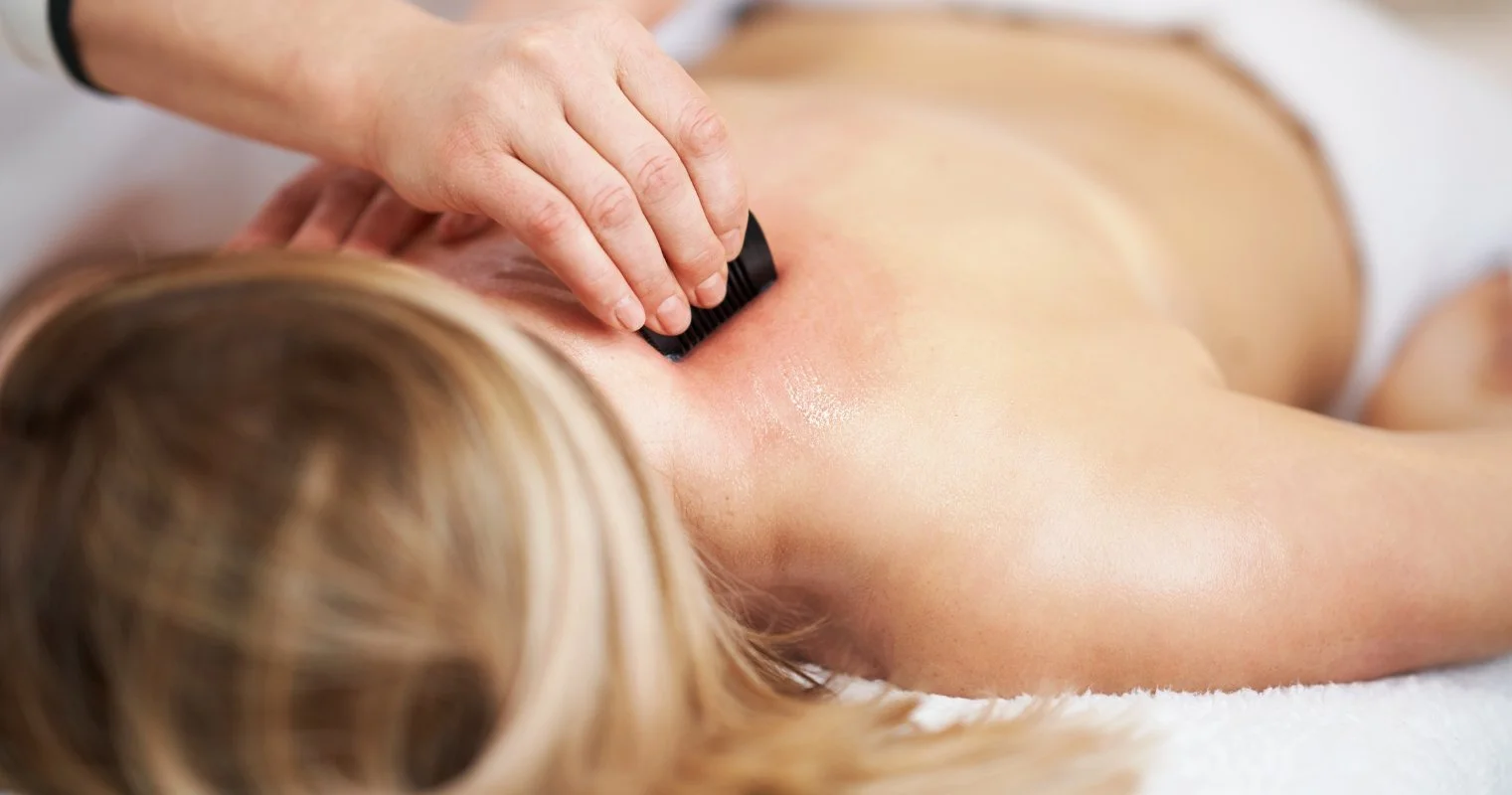
The area is lightly lubricated, then Sandeep uses Gua Sha or Graston tools to apply rhythmic, directional strokes along the muscle and fascial lines. You'll feel firm pressure — a "productive discomfort" rather than sharp pain. A gritty sensation under the tool indicates adhesions being addressed.
3. Post-Treatment
You may notice mild redness on the skin afterward — this is normal and expected. It's increased blood flow at the surface, not bruising. Most clients feel lighter and more mobile immediately after, with mild muscle soreness over the following 24–48 hours.
4. Frequency
Most clients see meaningful results in 3–6 sessions. Sandeep will provide a personalized treatment plan after your first visit. Drink plenty of water after each session to support tissue recovery.
Frequently Asked Questions
Does it hurt?
There is typically a "productive discomfort" similar to deep tissue massage or foam rolling. Your therapist works within your tolerance at all times. Mild soreness for 24–48 hours afterward is normal and a sign that your tissue is healing.
What causes the redness after Gua Sha?
The redness (called "sha" or petechiae) is caused by microcirculation rising to the surface — a healthy sign of increased blood flow. It fades within 24–72 hours and is not a bruise.
Is it covered by insurance?
Sessions with Sandeep are performed by a Registered Massage Therapist (RMT), meaning they may be covered by extended health benefit plans that include massage therapy. Why Knot! provides official receipts for submission.
Can I combine this with other treatments?
Yes — and it's often recommended. Combining IASTM with Active Release Technique, Cupping Therapy, or Neuromuscular Therapy can produce faster, more comprehensive results. Sandeep will suggest a plan based on your condition.
Who should avoid this therapy?
This treatment is not suitable for open wounds, active skin infections, areas of acute inflammation, or clients on blood thinners. Always share your full health history with your therapist before your session.
Ready to Release What's Holding You Back?
Book your Gua Sha or Graston Therapy session with Sandeep at Why Knot! Calgary. Relief is one appointment away.
